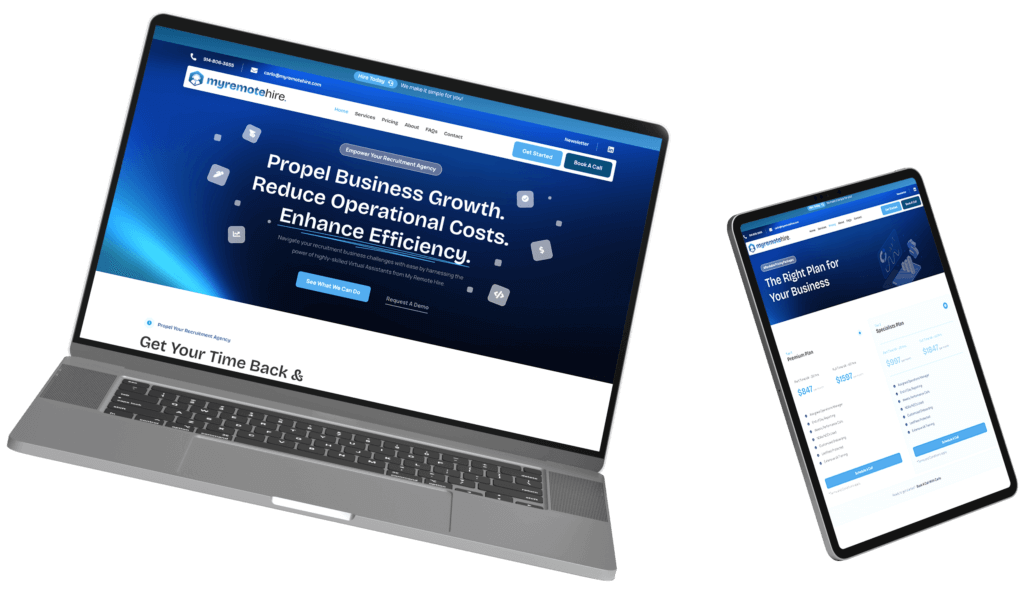

Website design user engagement is not a vanity metric. It is one of the clearest indicators of whether your site is converting attention into action or quietly losing potential clients the moment they arrive. This guide breaks down the design decisions that hold visitors longer, build trust faster, and move buyers toward conversion with intention.
Why User Engagement Starts With Design, Not Content
Most business owners assume that engagement is a content problem. If people are not reading, clicking, or converting, the instinct is to write more, publish more, or optimize the copy harder. But in most cases, the friction starts earlier. It starts the moment the page loads and a visitor makes a split-second decision about whether the experience feels worth their time.
Website design user engagement is shaped by how your site feels before it is fully processed. Load speed, visual hierarchy, whitespace, contrast, and navigation structure all register before a single headline is read. Design communicates trust, competence, and clarity. When it falls short on any of those, no amount of copy will recover the loss.
At Conte Studios, every website we build is engineered around the user’s experience first. That is not a philosophical stance. It is a conversion strategy.
The Design Elements That Have the Greatest Impact on Engagement
Visual Hierarchy
Visual hierarchy determines where the eye goes first and what path it follows. A well-structured page guides visitors from headline to supporting detail to call to action without requiring effort on their part. Poor hierarchy creates visual noise that forces users to search for meaning, and most will not bother. Use size, contrast, weight, and spacing deliberately to create a reading path that serves the business objective of the page.
Typography and Readability
Typography is one of the most underestimated engagement factors in web design. Font choice, line height, character spacing, and paragraph width all affect how long someone will read before they stop. Body text set too small, line height set too tight, or columns set too wide creates fatigue quickly. Design for reading endurance, not just aesthetic preference. The goal is a reading experience that feels effortless.
Page Speed and Perceived Performance
Google’s Core Web Vitals data consistently shows that pages loading beyond three seconds lose a significant portion of visitors before the content is seen at all. Speed is a design decision, not just a technical one. Image sizes, font loading strategy, animation weight, and third-party script management all contribute to perceived load time. A fast site signals operational competence and respects the user’s time. Both matter for engagement and for conversions.
If your current hosting environment is not built for performance, even the best-designed page will underdeliver.
Mobile-First Layout
Over 60 percent of web traffic arrives on mobile devices. A layout designed primarily for desktop will create friction for the majority of your visitors. Mobile-first design means building the core experience around small screens first and scaling up, rather than shrinking a desktop layout down. This affects navigation behavior, tap target sizes, content prioritization, and load strategy. Mobile engagement is where most sites either earn or lose their audience.
Navigation Clarity
Navigation is the backbone of user engagement. When visitors cannot find what they are looking for within seconds, they leave. Limit your primary navigation to the most decision-critical destinations. Keep labels direct and descriptive. Avoid multi-level dropdown menus that bury key pages. And confirm that your navigation structure is consistent across the entire site. Confusion at the navigation level resets trust and engagement in a single interaction.
Micro-Interactions and Their Effect on Engagement
Micro-interactions are the small, functional animations and feedback signals that tell users their actions are registering. A button that changes color on hover, a form field that confirms valid input, a scroll progress indicator on a long page. These are not decorative. They communicate responsiveness and build confidence that the site is working correctly.
When micro-interactions are absent, users often repeat actions out of uncertainty, which creates frustration. When they are present and well-executed, they create a sense of quality and attentiveness that reflects on the brand itself. Review your brand identity guidelines before designing micro-interactions to keep them consistent with your overall visual system.
According to Nielsen Norman Group, small interaction design details have a measurable impact on users’ perception of quality and their willingness to continue engaging with a product or service.
Content Presentation and Engagement Depth
Above-the-Fold Clarity
The first screenful of content on any page carries disproportionate weight. This space should immediately communicate what the page is about, why it matters to the visitor, and what action is available. Vague hero headlines, generic stock photography, and hidden value propositions all reduce engagement before the user scrolls. Design the above-the-fold area as a conversion asset, not as decoration.
Scannable Structure
Most web visitors scan before they read. Design your pages to reward scanning with clear headings, short paragraphs, strategic use of bold text, and visual breaks between sections. A dense wall of text signals effort. A well-structured page signals clarity. Users who can scan efficiently and find relevant sections quickly are far more likely to read in depth once they locate what they came for.
Internal Navigation for Long Content
For long-form pages and blog content, anchor-linked table of contents sections dramatically improve engagement depth. They reduce the intimidation of long pages, allow users to jump to the section most relevant to them, and encourage return scrolling. Our content strategy approach incorporates these structural decisions from the beginning of every content project.
Trust Signals Built Into Design
Trust is not communicated through copy alone. Design communicates trust through consistency, professionalism, and social proof integration. Logos of past clients, testimonials near key conversion points, review scores, case study thumbnails, and team photography all contribute to the trust architecture of a page.
Browse our client results to see how measurable outcomes are presented as part of a coherent design system, not as an afterthought. Design and social proof work together. Neither is as strong without the other.
According to the Baymard Institute, visual design quality directly affects whether users perceive a business as credible enough to engage with, particularly on first contact.
Conversion-Oriented Design Decisions
Engagement is the means. Conversion is the end. Every design decision should serve the path from first impression to committed action. That means strategic CTA placement, contrast ratios that make buttons impossible to miss, form design that minimizes friction, and page layouts that do not compete with themselves for attention.
Review your core service pages with this lens: does each page have one clear primary action? Is that action visible without scrolling? Is the path from interest to commitment direct? If any answer is no, the design is losing engagement that the content has already earned.
For businesses that need this level of strategic attention across every page and every touchpoint, our VIP Program delivers ongoing design and conversion support as a continuous partnership.
How to Audit Your Current Site for Engagement Gaps
Start with data. Pull your Google Analytics 4 engagement rate by page, your average session duration, and your scroll depth metrics. Identify the pages with the highest exit rates and the shortest time on page. These are your highest-priority design problems.
Then conduct a manual walkthrough. View each key page on both desktop and mobile. Time yourself from landing to locating the call to action. Note anything that requires extra effort, creates confusion, or feels visually inconsistent. Cross-reference what you find with the portfolio of completed projects to benchmark against a higher design standard.
According to Google’s Web Fundamentals documentation, combining behavioral data with hands-on qualitative review is the most reliable method for identifying the design problems that are actually affecting real users.
Frequently Asked Questions
1. What is website design user engagement and why does it matter?
Website design user engagement refers to the combination of design decisions that determine how long visitors stay on a site, how deeply they interact with content, and whether they take meaningful action. It matters because engagement is the bridge between traffic and revenue. A site that generates visits but fails to hold attention or guide action is not performing its primary function as a business asset.
2. Which design element has the biggest impact on engagement?
Page speed and visual hierarchy consistently rank as the highest-impact design factors on engagement. Speed determines whether users stay long enough to engage at all. Visual hierarchy determines whether users who stay can quickly understand the value being offered and find the action they should take. Both are foundational and neither can be compensated for by other design decisions.
3. How does mobile design affect engagement rates?
Mobile users represent the majority of web traffic across most industries, and mobile engagement rates differ significantly from desktop. Tap target sizes, content stacking order, navigation accessibility, and load speed all behave differently on mobile. Sites designed desktop-first and adapted for mobile almost always underperform on engagement metrics compared to sites designed mobile-first.
4. Can a redesign improve user engagement on an existing site?
Yes, and frequently the improvement is significant. Most existing business sites carry years of accumulated design debt including outdated layouts, inconsistent typography, slow images, and navigation structures that no longer reflect the business’s current offerings. A strategic redesign addresses these accumulated problems systematically rather than patching them individually. The result is a measurably better user experience across all engagement metrics.
5. How long does it take to see engagement improvements after a redesign?
Engagement improvements from a redesign are often visible immediately in session duration and bounce rate metrics. More meaningful conversion rate improvements typically take four to eight weeks to fully register, as search engines re-index the updated pages and returning users interact with the new experience. Tracking begins from day one, so baseline comparisons are available within the first month.
Ready to Build a Website That Keeps Visitors Engaged?
Conte Studios designs websites built for conversion, not just aesthetics. Every decision we make is anchored in user behavior, business objectives, and design excellence. Book a strategy call to discuss what your brand needs next.
Key Takeaways
- Website design user engagement is shaped by visual hierarchy, load speed, typography, and navigation before content is ever read.
- Mobile-first design is not optional. Most web traffic arrives on mobile and engagement rates reflect how well the experience is built for small screens.
- Page speed is a design decision. Image weight, font loading, and third-party scripts all affect perceived performance and engagement.
- Micro-interactions build trust by communicating responsiveness and design quality in small, functional moments.
- Above-the-fold clarity determines whether visitors stay long enough to engage with anything else on the page.
- Trust signals including client logos, testimonials, and case study results belong in the design architecture, not added as afterthoughts.
- Every page should have one primary call to action that is visible without scrolling and designed to convert, not just to inform.
- Engagement audits using Google Analytics data combined with manual walkthroughs are the most reliable way to identify real design problems on existing sites.